
How AI Agents Are Transforming Clinical Workflows
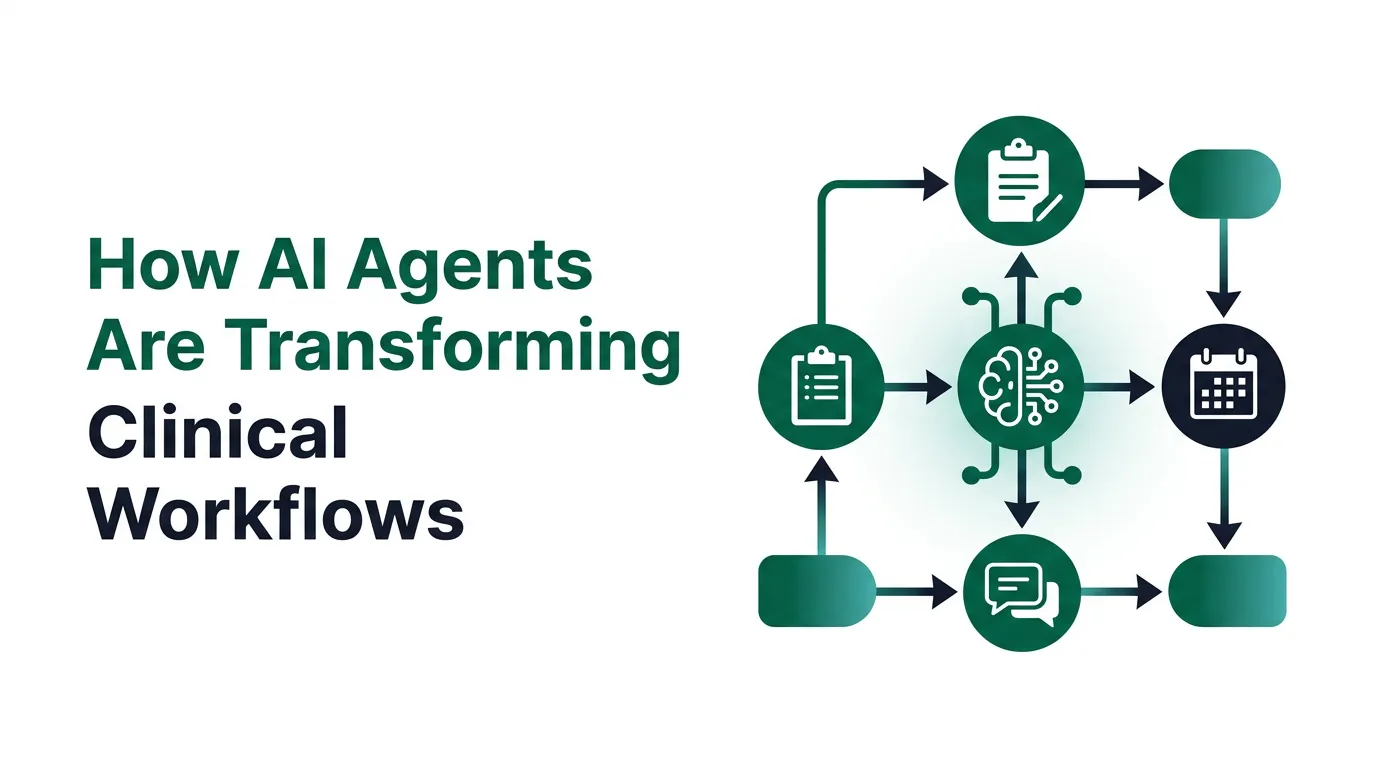
The average care coordinator spends over three hours daily on tasks that don't require clinical judgment: routing messages, scheduling follow-ups, confirming appointments.
That's time they could spend on patient care.
The administrative burden
A 2025 study by the American Medical Association found that administrative tasks account for 40% of a care team's workday. The cost isn't just financial — it's burnout, turnover, and ultimately worse patient outcomes.
Where AI agents fit
AI agents aren't replacing clinical decision-making. They're handling the predictable, repetitive work that slows teams down:
- Message routing — Automatically directing incoming messages to the right team member based on urgency and content
- Triage assistance — Flagging high-priority messages and suggesting response templates
- Follow-up scheduling — Sending automated check-ins based on care plans
- Documentation — Summarizing conversations for the medical record
Building trust in AI
Healthcare professionals are rightfully cautious about AI. Every system we build at Starfish Health follows three principles:
- Transparency — Agents explain their reasoning so clinicians can verify
- Human-in-the-loop — Critical decisions always route to a human
- Auditability — Every action is logged and traceable
Results we're seeing
Early partners using Starfish Health's AI-assisted communication report:
- 60% reduction in message routing time
- 35% fewer missed follow-ups
- Net Promoter Score improvement of 22 points among care staff
The future of healthcare communication isn't about replacing people. It's about giving care teams the tools to focus on what they do best: caring for patients.
Related articles
Jun 5, 2026·6 min read
How We Automated WhatsApp Onboarding for Every Client (Without Touching Meta's Dashboard)
A walkthrough of how we used Meta's Embedded Signup and the WhatsApp Cloud API to let clients self-onboard their WhatsApp number — entirely through code.
May 22, 2026·7 min read
Optometry Patient Engagement Vendors in Dallas: 2026 Vendor Comparison
Compare the top optometry patient engagement vendors for Dallas, TX practices in 2026 — Starfish Health vs. DoctorConnect, Adit, RevEngage, and Weave.
May 2, 2026·9 min read
Building a Production-Grade Data Pipeline
ETL pipeline: JSON extraction, Supabase raw tables, dbt transforms, production UPSERTs—manifests, queues, idempotency, and failure modes we hit in production.